
Ashwagandha With What?
Understanding Withanolides and What They Really Mean
If you’ve ever searched “what are withanolides in ashwagandha?”, you’ll have noticed something.
Every product mentions them. Very few explain them.
You’ll see labels saying “standardised to 5% withanolides” or “high-strength ashwagandha extract.” But what are withanolides, exactly? Are they one compound? And does a higher percentage actually change anything?
If you’re buying a standardised ashwagandha extract, those questions matter. Because once you move beyond the plant name, what you’re really buying is a defined phytochemical profile.
The plant behind the extract
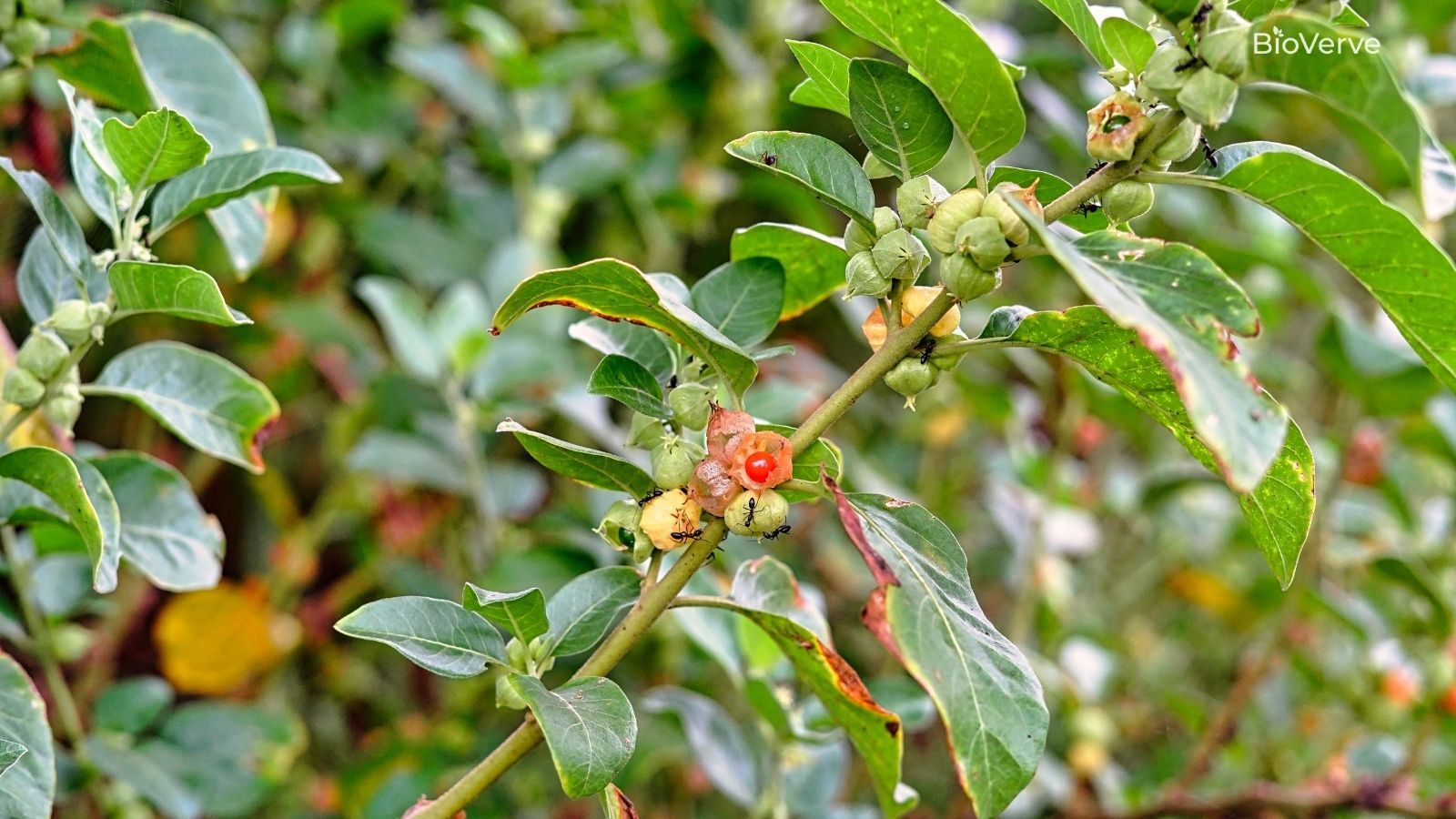
Ashwagandha (Withania somnifera) has been used for centuries in traditional Ayurvedic practice, where it was valued as a tonic supporting resilience, recovery, and general vitality.
It grows primarily in dry subtropical regions of India and neighbouring areas, favouring sandy, well-drained soils and relatively low rainfall.
Climate matters. Environmental stress influences phytochemical development, including the production of withanolides.
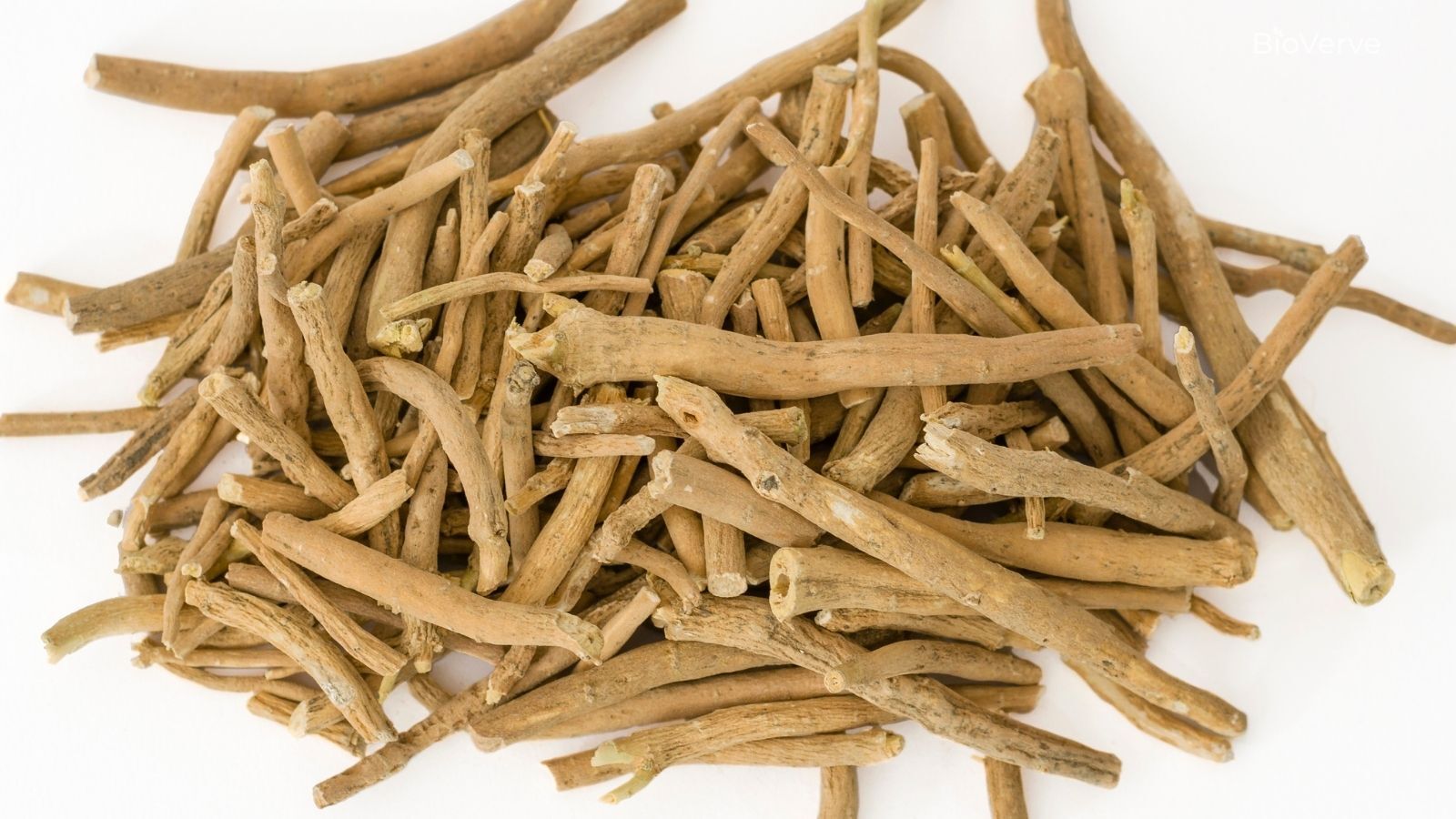
Traditionally, the root was used. That distinction is important, as roots and leaves differ significantly in phytochemical composition.
What does “standardised to withanolides” mean?
Modern ashwagandha supplements typically use concentrated extracts rather than raw root powder.
When a label states “5% withanolides,” it means the extract has been processed so that a defined percentage of its weight consists of compounds collectively measured as withanolides.
Standardisation improves:
- Batch consistency
- Predictability of composition
- Stability of active constituents
But here’s the key point:
Withanolides are not a single compound.
Withanolides are a family of compounds
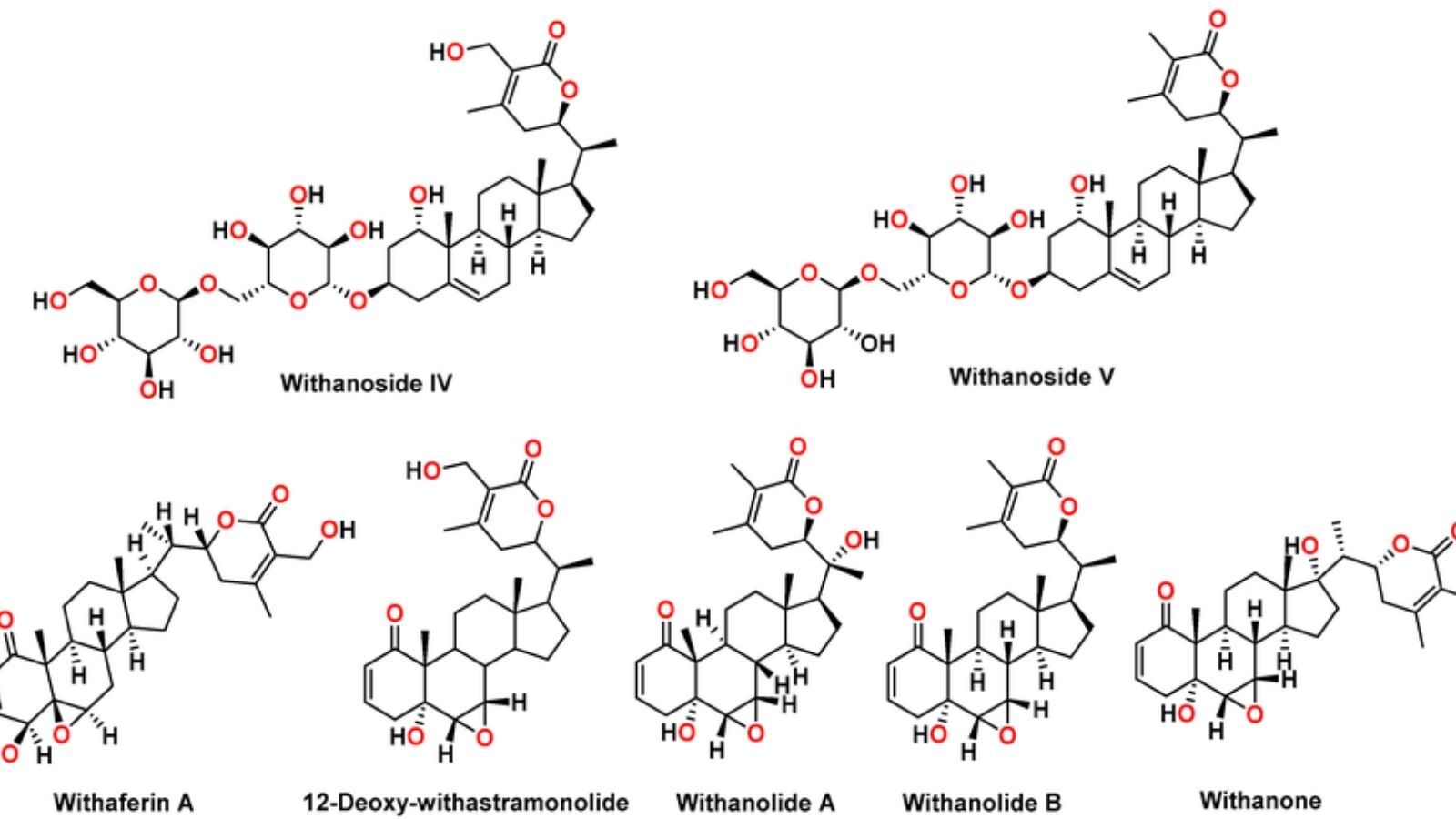
Withanolides are a group of naturally occurring steroidal lactones found in ashwagandha.
They include compounds such as:
- Withaferin A
- Withanolide A
- Withanone
- Several additional minor constituents
Different extracts contain these in different proportions.
Most mainstream products standardise to 5% total withanolides, without specifying individual compounds.
That establishes a baseline - but it does not define the detailed phytochemical profile.
A more defined extract profile
W-ferinMax is standardised to:
- 15% total withanolides
- 6% withaferin A
This represents a more concentrated and more specifically defined extract compared to standard 5% products.
Higher standardisation increases phytochemical density. Specifying withaferin A introduces compositional clarity rather than relying solely on total content.
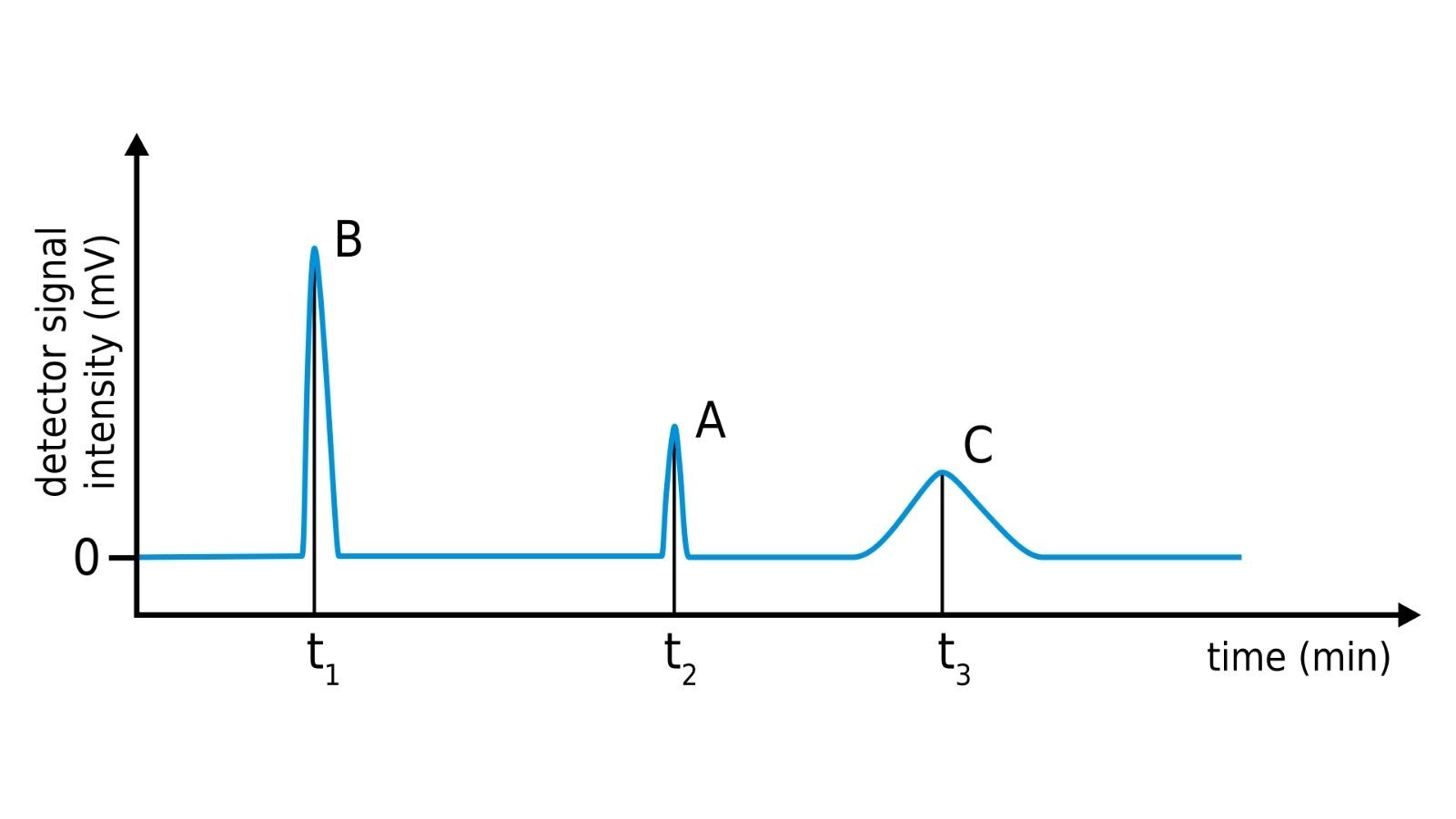
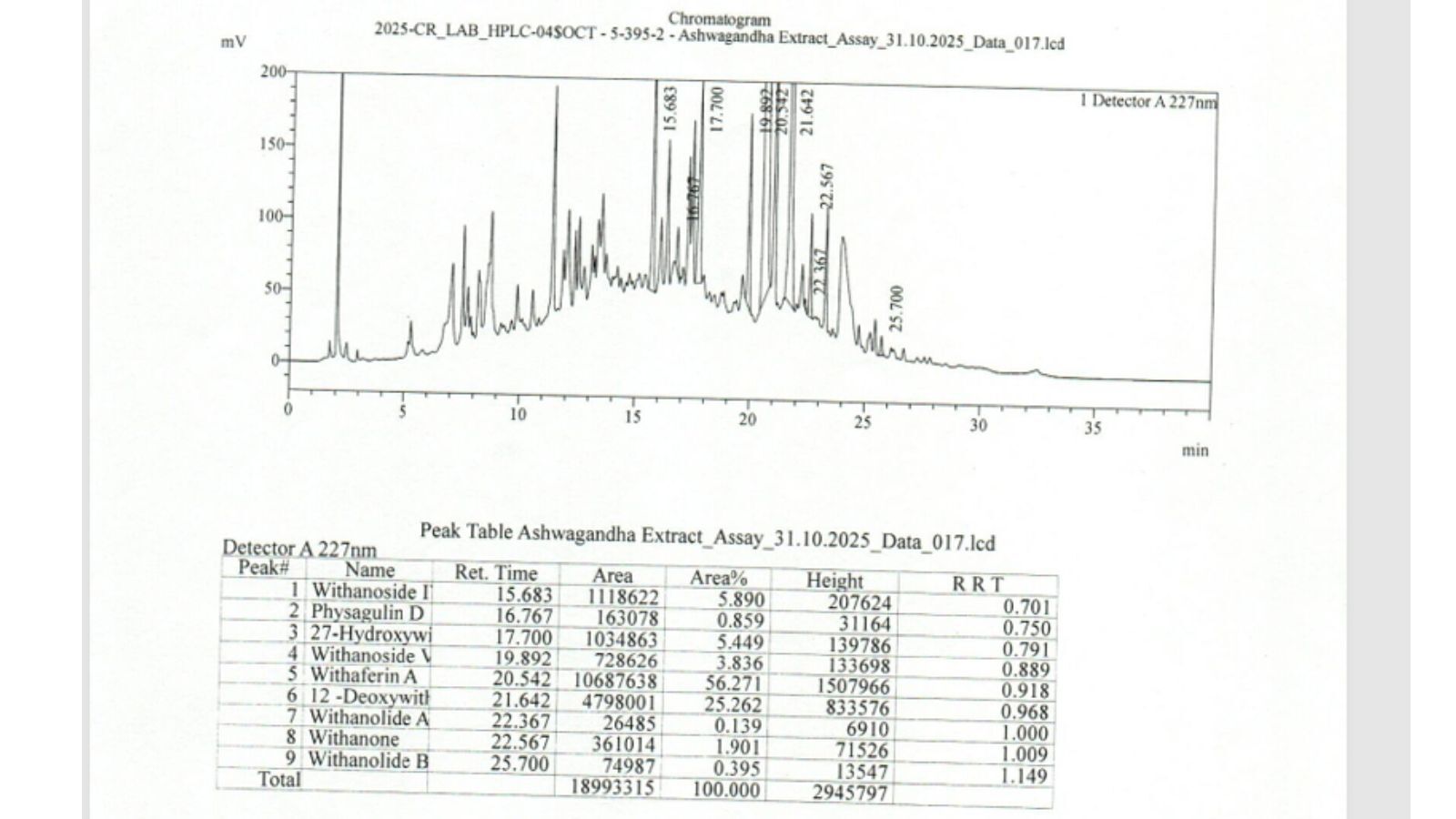
Analytical techniques such as High Performance Liquid Chromatography (HPLC) allow manufacturers to separate and quantify individual compounds within an extract.
This is how defined standardisation is verified.
450 mg at 15% vs typical 5% extracts
A typical 600 mg capsule standardised to 5% delivers approximately 30 mg of total withanolides.
A 450 mg capsule standardised to 15% delivers approximately 67.5 mg of total withanolides, alongside a defined 6% withaferin A fraction.
Although the capsule weight may appear smaller, the standardised phytochemical content is significantly higher and more clearly characterised.
This reflects extract density and formulation intent rather than marketing emphasis.
Potential benefits and indirect pathways
Ashwagandha has been studied for supporting:
- Stress resilience
- Sleep quality
- Physical recovery
- Cognitive performance
Many human studies focus on stress regulation and cortisol balance.
From there, secondary effects may follow:
Improved stress response > Better sleep patterns > Improved recovery signalling > More stable mood and performance markers.
In some contexts, stress regulation has been associated with improvements in hormonal markers in men under stress. Outcomes vary between individuals, and supplements should be viewed as supportive rather than corrective.
What should you look for in an ashwagandha supplement?
- Root-only extract
- Clear withanolide percentage
- Defined individual compound specification
- Documented batch testing
- Transparent sourcing
The difference between 5% and 15% is not cosmetic. It reflects extract density, analytical definition, and compositional control.
Final thoughts
Ashwagandha is not simply a trending adaptogen. It is a chemically complex botanical whose effects depend on cultivation, extraction, and standardisation strategy.
Withanolides are not one molecule - they are a family. And how that family is represented within an extract determines consistency and intensity.
When you understand what an extract is standardised to X and why - you move from buying a plant name to buying a defined composition.