
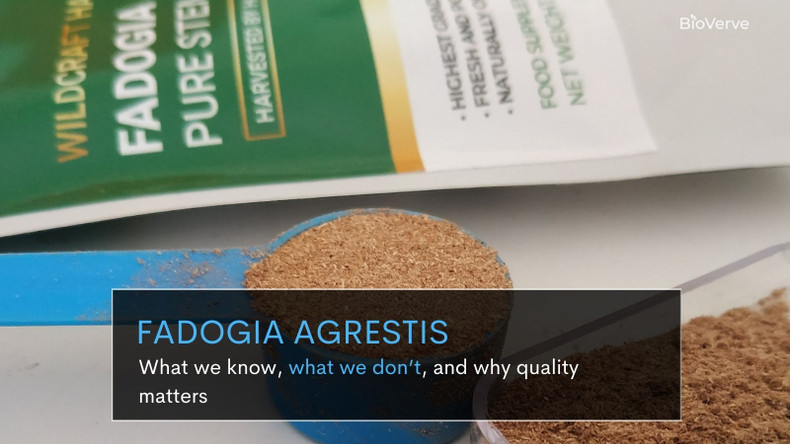
Fadogia Agrestis
What we know, what we don’t, and why quality matters
Fadogia agrestis isn’t a new plant - but for most people, it’s a new name.
Interest in it surged in 2021, when it was discussed during a long-form podcast conversation about lifestyle, training, and supplementation in the context of hormone health.
Almost overnight, a previously obscure West African botanical entered the mainstream - bringing curiosity, enthusiasm, and a fair amount of confusion with it.
This guide is designed to slow things down and explain what Fadogia agrestis is, what we actually know, and what to look for if you’re considering it.
Why Fadogia agrestis entered the spotlight
In mid-2021, Dr Andrew Huberman discussed Fadogia agrestis during a podcast appearance, referencing it as part of a broader discussion on training, nutrition, and supplementation.
Since then, Fadogia agrestis has become far more visible, often discussed alongside other botanicals traditionally associated with vitality and performance.
What’s important to understand is that interest grew faster than research, and supply chains struggled to keep up - making sourcing and verification especially important.
What is Fadogia agrestis?
Fadogia agrestis is a small, woody shrub native to West and Central Africa, particularly Ghana and neighbouring regions.
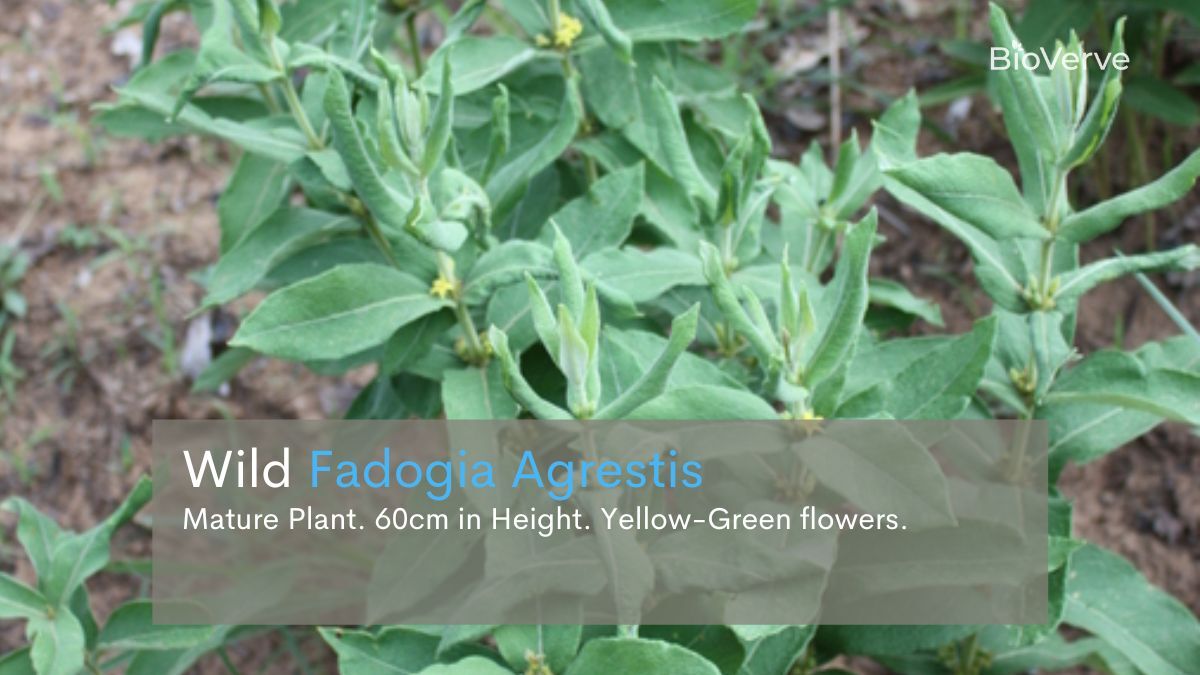
Botanically, it is an erect undershrub that typically grows between one and three feet tall, with yellow-green flowers and stems and leaves covered in short, dense hairs.
For generations, it has been used in regional herbal practices associated with stamina, vitality, and general wellbeing. As with many traditional plants, historical use provides context - but not modern dosage guidance.
What does research currently tell us?
Scientific interest in Fadogia agrestis began to emerge in the mid-2000s.
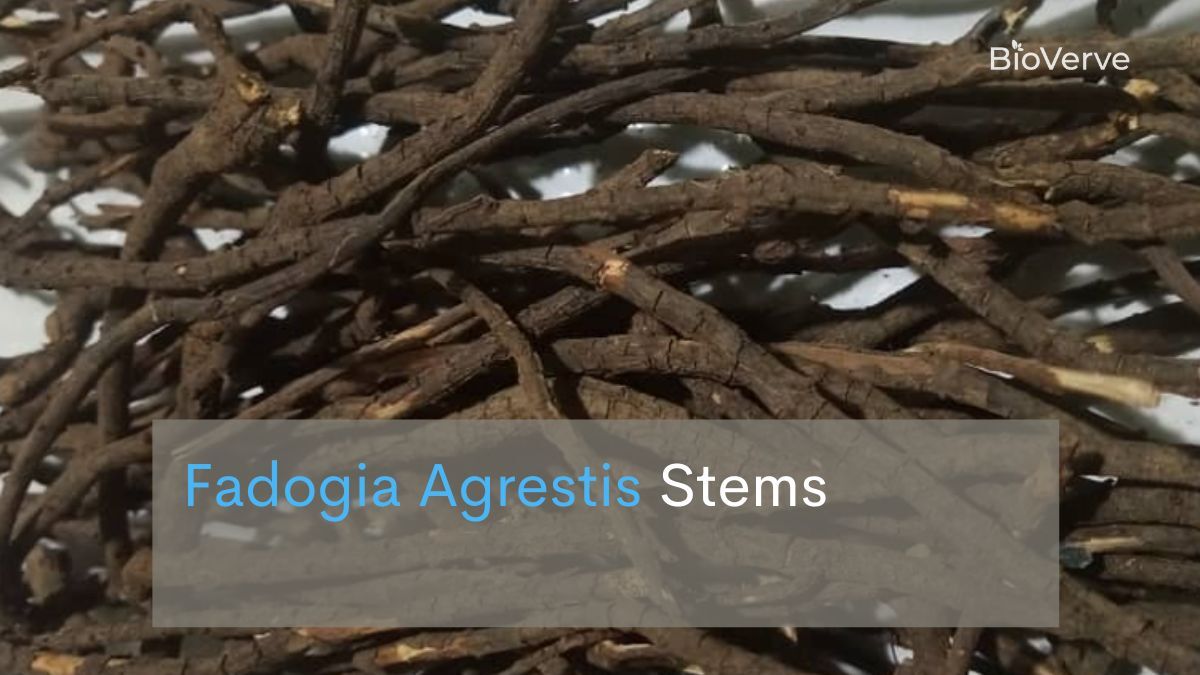
In 2005, Professor Musa Toyin Yakubu (University of Ilorin, Nigeria) published preclinical research exploring the effects of aqueous extracts of Fadogia agrestis stem material in animal models.
These studies explored biological markers and behavioural observations, but it’s important to place them in context:
- They were conducted in animals, not humans
- They explored mechanisms, not outcomes
- They do not establish recommended dosages
At present, there is limited human clinical data on Fadogia agrestis, which is why a cautious, informed approach matters.
Dosage: why there’s no single answer
There are no established human clinical dosage guidelines for Fadogia agrestis. As a result, recommendations vary widely.
Based on traditional use patterns and feedback from sourcing partners in West Africa, BioVerve approaches dosage conservatively and transparently.
Full-spectrum stem powder
- Typical starting range: around 2 g per day
- Often used in short cycles (e.g. 4–6 weeks)
- Adjustments should be gradual and individual
Extracts
Extracts are not interchangeable with powders. A 10:1 extract is significantly more concentrated and typically used at much lower amounts.
If a lower amount feels sufficient, there is no requirement to increase intake.
Sourcing and processing at BioVerve
BioVerve sources freshly harvested Fadogia agrestis stems from Ghana, where established supply chains and botanical identification are reliable.
The material is then processed by our manufacturing partner, where it is cleaned, steam sterilised, and milled into a fine powder - or further processed into a 10:1 extract.
The primary difference between powder and extract is convenience, not superiority.
Testing and quality checks
All Ghanaian Fadogia agrestis supplied by BioVerve undergoes structured quality testing, including:
1) Safety screening
- Microbiological testing
- Heavy metal analysis (lead, arsenic, mercury, cadmium)
2) Identity confirmation
Botanical identification is carried out using thin-layer chromatography (TLC), with samples compared against authenticated reference material.
The issue of fake Fadogia agrestis
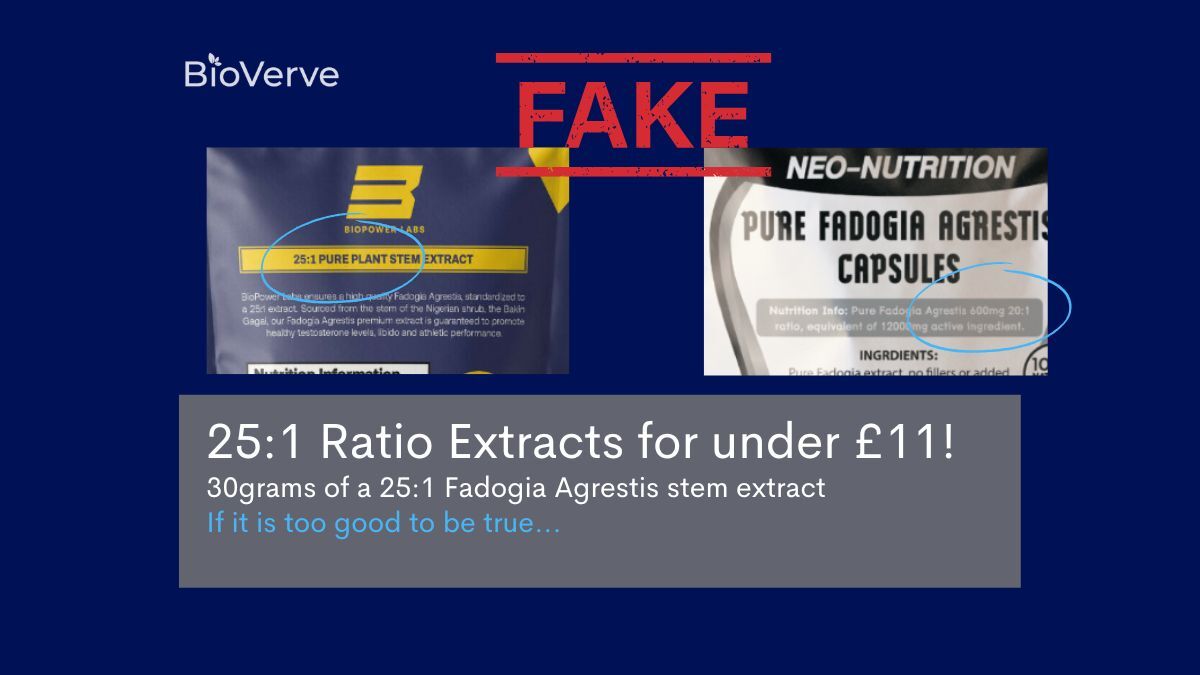
As demand increased, so did the number of questionable products.
At the time of writing, only two forms of genuine Fadogia agrestis are commercially established:
- Stem powder
- 10:1 extract
Fadogia agrestis is one of the most expensive botanicals in this category. Products claiming very high extract ratios at unusually low prices are unlikely to be authentic and are best avoided.
Final thoughts
Fadogia agrestis sits at the intersection of traditional use, emerging research, and modern curiosity.
A responsible approach focuses on verified sourcing, conservative use, transparent testing, and realistic expectations. As with any botanical, quality matters more than trend-driven claims.
Fadogia agrestis 10:1 extract is available as a single-ingredient formulation here.
Fadogia agrestis powder is available as a single-ingredient formulation here.