
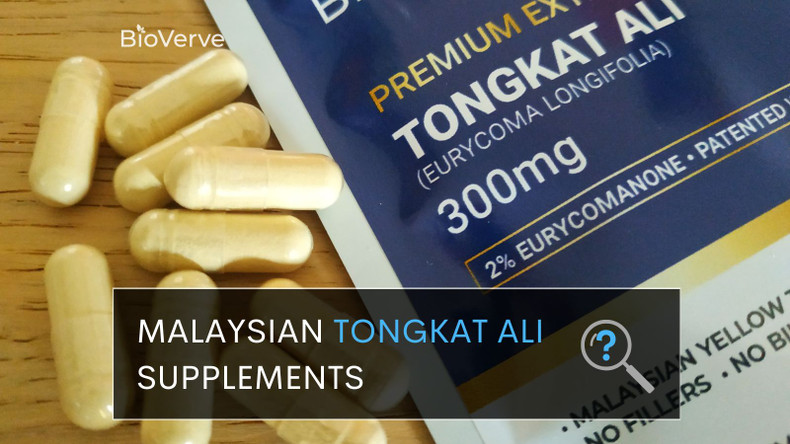
Malaysian Yellow Tongkat Ali
What quality actually looks like - and why extraction matters
Tongkat Ali is one of those ingredients that gets talked about a lot - often loudly, and not always clearly.
There’s “strong” Tongkat Ali. There’s “high-percentage” Tongkat Ali. And then there’s Tongkat Ali that’s actually been thought through from root to extract.
This article isn’t about hype. It’s about explaining what quality looks like when it comes to Malaysian Yellow Tongkat Ali — and why the details matter more than most labels let on.
A quick overview: what is Tongkat Ali?
Tongkat Ali (Eurycoma longifolia), sometimes called Longjack in North America, is a small evergreen tree native to South-East Asia. It grows primarily in Malaysia, Indonesia, and Thailand, where it has a long history of traditional use.
The part of the plant used in supplements is the root. One of its naturally occurring compounds, eurycomanone, is commonly used as a marker to assess identity, consistency, and extract quality.
What defines a high-quality Tongkat Ali root?
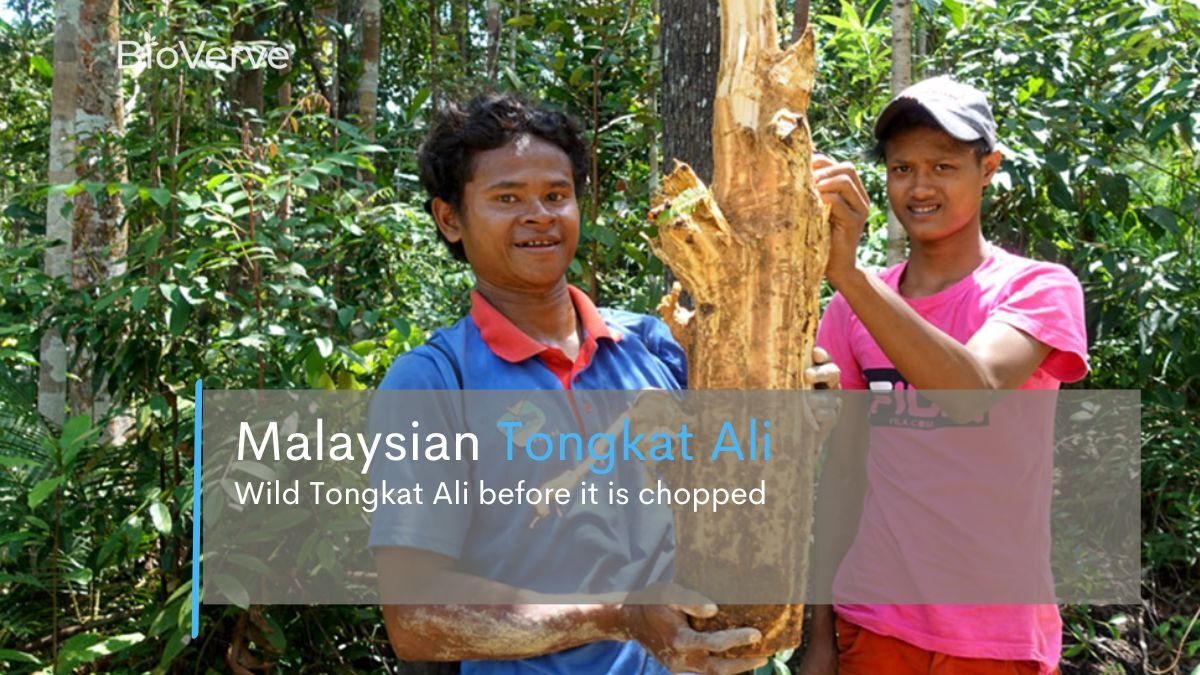
Not all Tongkat Ali roots are the same. High-quality, mature roots typically contain eurycomanone levels in the region of 0.3% to 1.5% before extraction.
At BioVerve:
- Roots are wild harvested
- Harvesting and extraction take place in Malaysia
- Each batch is manufactured specifically for BioVerve
The quality of the starting material sets the ceiling for everything that follows.
Eurycomanone content: finding the sweet spot
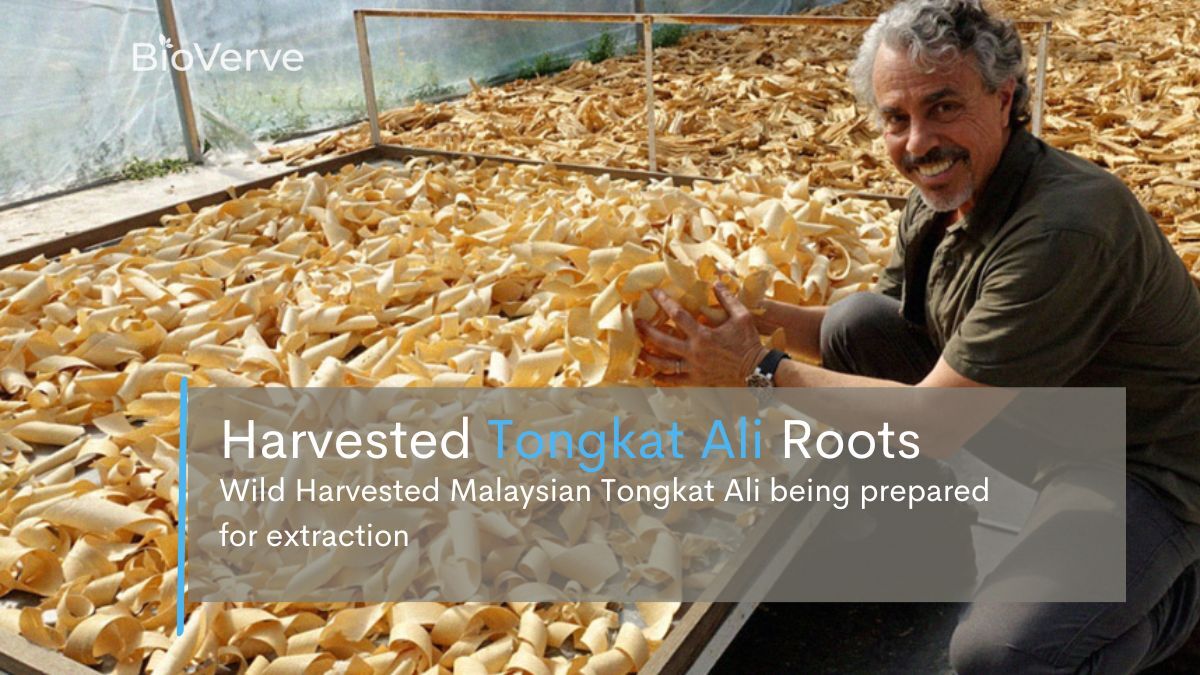
After extraction, Tongkat Ali can be standardised to different eurycomanone levels depending on the final format.
- Capsules: ~1%–3%
- Tablets: up to ~10%
- Powders: ~0.1%–0.3%
For capsules, 1%–3% is widely considered the most stable and practical range. Beyond this, the extract becomes more sensitive to light, heat, and moisture, and more difficult to handle consistently.
BioVerve’s Malaysian Tongkat Ali is therefore standardised to 2% eurycomanone - chosen for balance, reliability, and long-term stability.
Why extraction method matters
One of the most common questions we’re asked is the difference between Malaysian and Indonesian Tongkat Ali. The most important distinction is often the extraction method.
BioVerve’s Malaysian Tongkat Ali uses a patented ultrasonic hot-water extraction process.
Compared to alcohol-based extraction, water extraction generally produces a more stable powder with reduced sensitivity to environmental moisture and heat.
This difference becomes noticeable in real-world storage conditions, where alcohol-extracted powders tend to soften or resinise more readily over time.
Testing and verification
Each batch of BioVerve’s Malaysian Tongkat Ali is tested for eurycomanone content and manufactured to a defined specification.
Independent verification has been carried out by the Forest Research Institute of Malaysia (FRIM), providing additional confidence in identity and quality.
Storage still matters
Even a stable extract benefits from good storage habits:
- Reseal the pouch after each use
- Expel excess air
- Store in a cool, dark cupboard
- Avoid unnecessary stockpiling
Final thoughts
Tongkat Ali isn’t defined by headline numbers. It’s defined by root quality, extraction method, sensible standardisation, and stability over time.
Malaysian Yellow Tongkat Ali, when produced carefully, offers consistency without chasing extremes - and that’s often what separates a reliable extract from a forgettable one.
Malaysian Tongkat Ali Extract is available as a single-ingredient formulation here.
For further detail on composition and standardisation, see our Malaysian Tongkat Ali extract ingredient article.
Further reading & references
- Ismail et al. (2012) - Eurycoma longifolia and its bioactive compounds
Journal of Ethnopharmacology - sciencedirect.com - Tambi & Imran (2010) - Eurycoma longifolia Jack in managing men’s health
Andrologia — wiley.com - Forest Research Institute Malaysia (FRIM) - Research on Eurycoma longifolia
frim.gov.my